
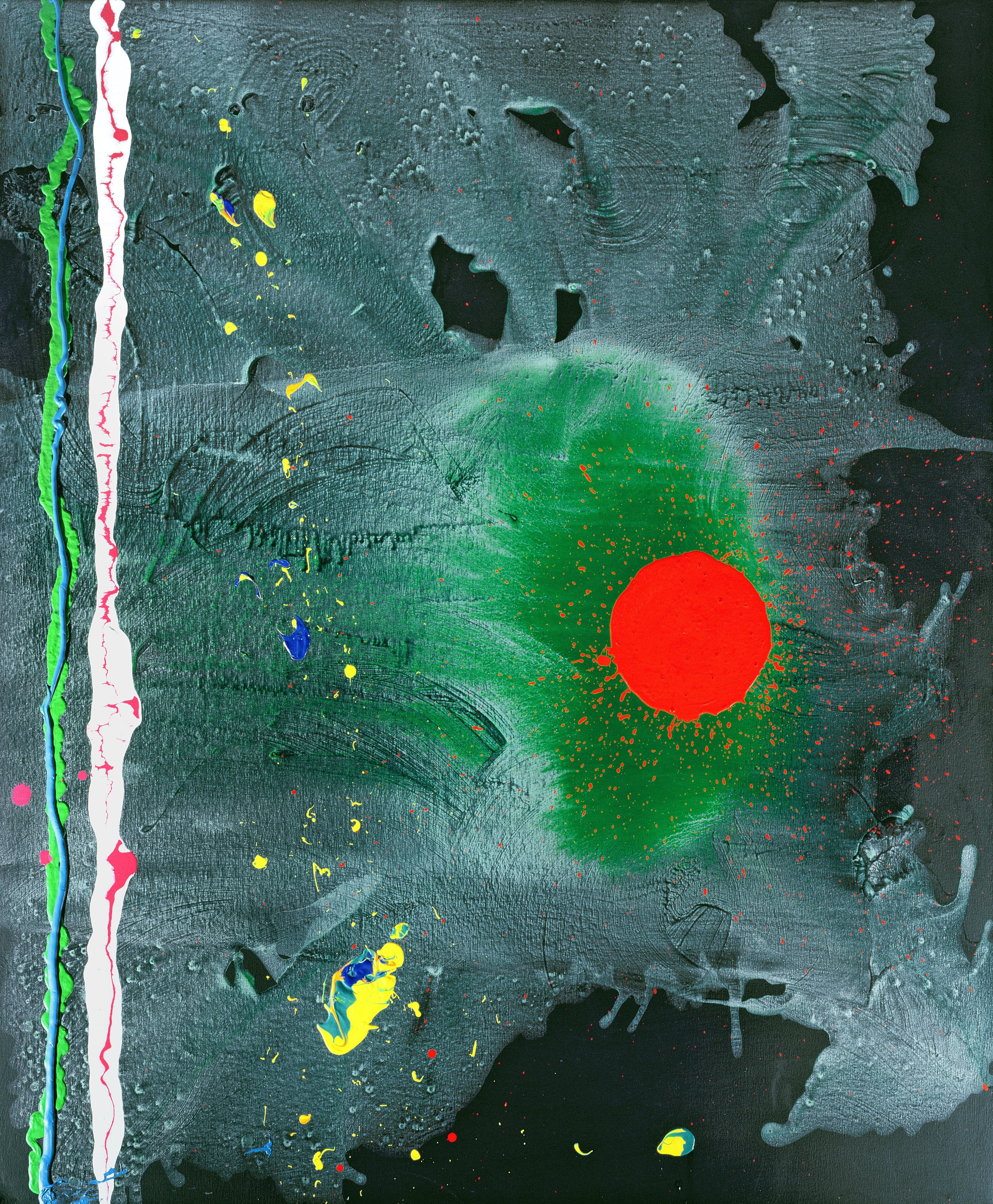
John Hoyland (b.1934 Sheffield, UK – d.2011 London, UK) was one of the most inventive and dynamic abstract painters of the post-war period. Over the span of more than a half-century his art and attitudes constantly evolved. A distinctive artistic personality emerged, concerned with colour, painterly drama, with both excess and control, with grandeur and above all, with the vehement communication of feeling. Collected here is a selection of Hoyland’s work showing his progression from the hard-edge works of the early 1960s through to the intensely subjective paintings that marked his final decade

John Hoyland RA
John Hoyland (1934-2011) was one of the leading British painters of his generation.
As the critic William Feaver once wrote, ‘A pukka Hoyland is a work not of hand and eye, but of total Self.’ And it was this whole-hearted commitment to painting that characterised his six decades of work. His career was decisively influenced in the late 1950s and 1960s by his experience of American Abstract Expressionism. But as an artist and a man he was enough of an individual to be able to knowingly absorb and deflect those influences, and set himself on his own path.
Hoyland preferred not to be known as an abstract painter. He felt it too calculating a term or that it implied some kind of premeditation in his process. After an initial dalliance with figurative painting in the 1950s he became a life-long proponent of the possibilities of non-figurative imagery, which possessed for him, he once wrote, ‘the potential for the most advanced depth of feeling and meaning’. As Andrew Lambirth writes: ‘His paintings are abstracts but they are not about absolutes. They are about contingencies and specifics: very particular emotions, thoughts and feelings dependent upon the act of looking.’